
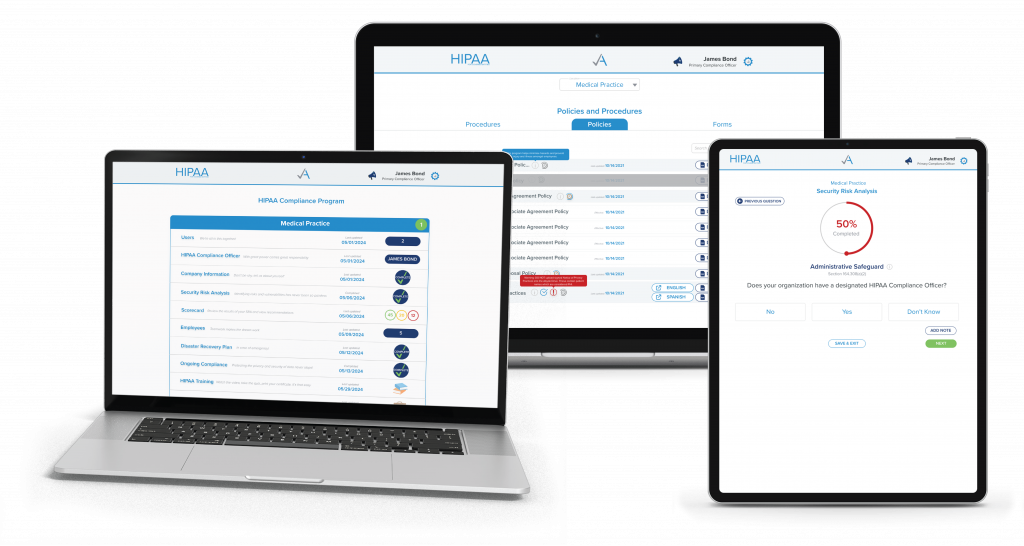

ABYDE FOR WEAVE MEMBERS

It's time for stress-free compliance.

  • EASIEST SOFTWARE YOU’LL EVER USE

    And if we’re being honest, easy is an understatement. All companies say it, but we are so confident in the simplicity of our software that we will prove it.

  • ‘HANDS OFF’ APPROACH

    We automate it all – from notifications about training to policy generation. Can you imagine not having to set your own reminders?! Go ahead, focus on your patients – we will ping you with the important stuff.

  • CUSTOMER SUCCESS TEAM LIKE NO OTHER

    We will meet you where you are – whether that’s by phone, chat, or email. It’s tough stuff in the tech space, but our customers love us as much as we love them.

  • STATE BY STATE, LAW BY LAW

    No matter what state your practice is in, our solution is for you — from sea to shining sea. We know our stuff and dedicate ourselves to staying on top of the latest state and federal changes so you don’t have to.

  • MORE THAN JUST SOFTWARE

    With us, you get more than policies and software. We offer Master Classes, newsletters, and more to keep you up to date. At the end of the day, we are proud to lead with education.

LATEST COMPLIANCE NEWS

OSF Healthcare HIPAA Settlement

What OSF Healthcare’s Ransomware Fine Teaches Every Practice About SRAs

August 5, 2026 The latest HIPAA fine is another clear reminder that ransomware attacks are, unfortunately, here to stay in the healthcare industry. A settlement involving the OSF Healthcare System was recently announced by the Office for Civil Rights (OCR). As an enterprise healthcare provider in the midwest, the organization serves 174 locations, including 16 hospitals – a prime target for a ransomware attack.    So, what happened?  In April 2021, OSF discovered that they joined the unlucky club of ransomware victims when a malicious actor deployed Nephilim, a ransomware strain made to target larger organizations. Once the ransomware infected OSF systems, the hacker demanded payment or patient Protected Health Information (PHI) would be leaked online. In this attack, sensitive information like financial account information, driver’s license numbers, medical record numbers, and more, were all exposed. Over 53,000 patient records were exposed in this attack.  When ransomware attacks in healthcare have soared 278% in recent years, it’s more of a when then an if your organization doesn’t have the right safeguards in place.  While the breach was discovered in April, OSF healthcare reported the breach to the OCR in October. The OCR took it from there, digging into what precautions (or lack thereof) let this happen.  What did the OCR discover? If you’ve read any of our other fine breakdowns, you already know where this is going: another missing Security Risk Analysis (SRA).  The SRA is a required document every HIPAA-regulated entity (ie: every practice and their Business Associates that handle patient information) needs to complete. The SRA is a thorough review of the physical, technical, and administrative safeguards in place to prevent PHI ending up in the wrong hands. While the OCR didn’t specify exactly how the ransomware got into OSF’s system, a technical safeguard vulnerability was very likely the entry point. A proactive SRA could have flagged that gap before it turned into a major breach. In addition to missing this required documentation, OSF also took too long to report the breach to the OCR and notify affected patients. This is a direct violation of the Breach Notification Rule, which requires organizations to notify patients within 60 days of a discovered breach. Moreover, since the breach impacted more than 500 patients, OSF was also required to report this breach to the OCR within 2 months as well. Time is of the essence in every component of a breach, from securing systems to ensuring affected parties are aware to protect themselves and an over five month delay was unacceptable in the eyes of the OCR.    What was the result?  OSF’s settlement tops the list as the largest fine of the year, coming in at $552,250, plus government monitoring for the next two years.  It’s very important to note that this breach occurred in 2021, meaning that over five years were spent from the initial breach, to investigations, to the public press releases. Also, the average cost of a healthcare breach is over 7 million dollars –  from implementing secure systems, notifying patients, legal fees, and more. The Takeaway While the settlement payment and Corrective Action Plan (CAP) are just the cherries on top, this experience was a tremendous cost of time, money, and resources, highlighting the importance of making sure everything is secure before a situation occurs.  So, when was the last time you looked at your SRA? It’s time to seriously analyze your current compliance posture. Ransomware groups don’t check whether you’re a small dental office or a 16-hospital health system before they attack, they check whether the door was left open. Time and again, OCR’s findings come back to the same root cause: organizations can’t secure what they haven’t even identified as a problem. Looking to review your current compliance standings? Meet with our team of experts for a complimentary educational consultation. 

Read More »
Spencer Gifts HIPAA Fine

Spencer Gifts HIPAA Settlement: Ransomware, Risk Analysis, and What Comes Next

June 19, 2026   Quick Guide:  The Office for Civil Rights issued a major fine towards Spencer Gifts benefits plan. This fine reinforces that all HIPAA-regulated entities must have a thorough compliance program.    The Stats You Need to Know 76%: The percentage of large healthcare breaches now caused by hacking/IT incidents. $450,000: Financial settlement of this enforcement. 10,023: The number of individuals were impacted in this breach.  264%: The increase in ransomware-related breaches reported to the OCR since 2018.   When you think about Spencer’s, you likely picture the staple mall store with pop culture novelty gifts, not the latest HIPAA settlement enforcement headline.  Spencer Gifts LLC Flexible Benefits and Welfare Benefit Plans, or their employee benefits plan, reached a settlement with the Office for Civil Rights for $450,000 and a 2 year Corrective Action Plan (CAP).  This fine is a reminder that Covered Entities include all parties that create and utilize patient data, including health care plans. While they might not see patients traditionally, they still are responsible for keeping Protected Health Information (PHI) secure.    What Happened?   In response to employee complaints regarding access to their employee benefits portal, Spencer Gifts Health Plan discovered their systems were infiltrated with ransomware in November 2021. Malicious actors encrypted over 10,000 individuals’ PHI and demanded a ransom. The exposed data included names, phone numbers, social security numbers, and more, putting employees at risk.  The breach was reported in January 2022. After years of investigation, it was settled that the plan failed to meet basic HIPAA Security Rule requirements proactively.    The Compliance Gaps A common misconception is that an organization faces a financial penalty due to a breach. While the breach serves as the catalyst for the investigation, the OCR is looking to see if an organization has a thorough compliance program in place and made a genuine effort to protect patient data.  For instance, the health plan did not complete a Security Risk Analysis (SRA). This required assessment identifies all technical, administrative, and physical safeguards (and vulnerabilities) across your organization. By completing this document, your organization can address concerns before they become an issue. There’s no way to know where risks are unless they are properly reviewed.  Additionally, the plan did not have sufficient policies and procedures, nor trained staff adequately. Without sufficient policies and training, staff are left without the tools to recognize and respond to HIPAA threats before they escalate. As a result, Spencer Gifts now faces $450,000 in penalties and two years of government monitoring to ensure those missing requirements are finally implemented. And that figure doesn’t account for the years of investigation, legal fees, breach notification costs, and operational disruption that preceded the settlement.   The Biggest Takeaway This case isn’t only a lesson for retail organizations’ health plans, but it’s a warning for every HIPAA-regulated entity. The OCR can and will investigate any organization exposed for failing to meet HIPAA requirements, including small medical practices To be prepared before a cyberattack occurs, make sure your organization has: A completed and current Security Risk Analysis. A trained workforce that knows how to handle PHI Accessible policies and procedures staff can actually reference. An up-to-date compliance program.  Ready to strengthen your compliance program? Schedule a free educational consultation with our team today.

Read More »

READY TO BE STRESS-FREE?