

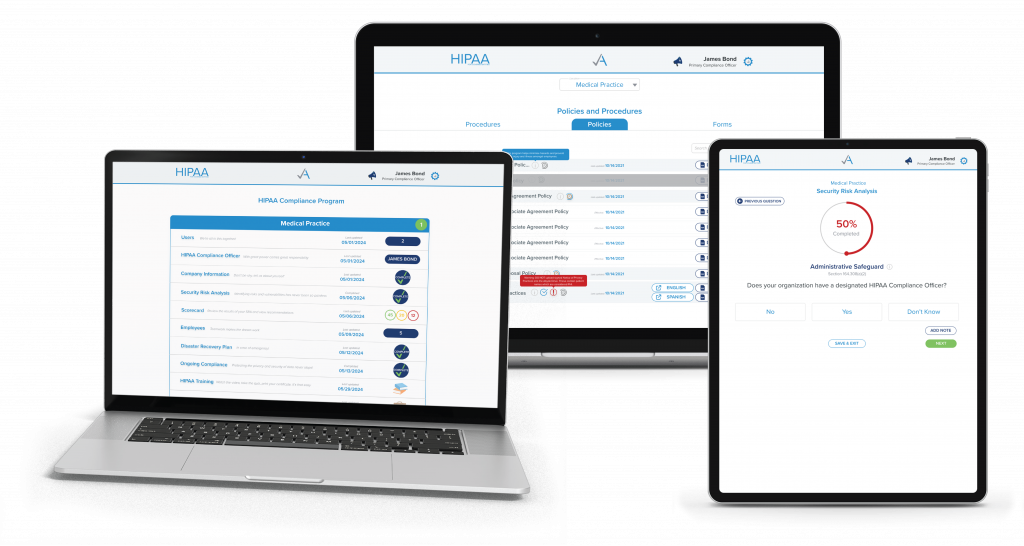

ABYDE FOR 323 TECHNOLOGIES USERS

It's time for stress-free compliance.

  • EASIEST SOFTWARE YOU’LL EVER USE

    And if we’re being honest, easy is an understatement. All companies say it, but we are so confident in the simplicity of our software that we will prove it.

  • ‘HANDS OFF’ APPROACH

    We automate it all – from notifications about training to policy generation. Can you imagine not having to set your own reminders?! Go ahead, focus on your patients – we will ping you with the important stuff.

  • CUSTOMER SUCCESS TEAM LIKE NO OTHER

    We will meet you where you are – whether that’s by phone, chat, or email. It’s tough stuff in the tech space, but our customers love us as much as we love them.

  • STATE BY STATE, LAW BY LAW

    No matter what state your practice is in, our solution is for you — from sea to shining sea. We know our stuff and dedicate ourselves to staying on top of the latest state and federal changes so you don’t have to.

  • MORE THAN JUST SOFTWARE

    With us, you get more than policies and software. We offer Master Classes, newsletters, and more to keep you up to date. At the end of the day, we are proud to lead with education.

LATEST COMPLIANCE NEWS

medical record retention requirements

Patient Records: What to Keep, How Long to Keep It, and When to Destroy It

January 23, 2026   Looking to bring that “New Year, New Me” energy into your practice by clearing out records in the practice? Not so fast. It’s not as simple to declutter Protected Health Information (PHI) as it is your closet of old clothes.  Each state upholds strict retention requirements, ensuring that PHI is secure and accessible for several years before proper disposal.  That’s why we’re breaking down the retention rules today, so that whatever you shred today doesn’t become a legal headache tomorrow.    So, how long?  Like most legal requirements, it depends on the situation and what state you’re in. Each state medical board’s goal is to give patients plenty of time to request their records and ensure their data is protected by the high standards they deserve. Although these are mandates, your practice must also comply with any stricter state-specific guidelines. Some states require records to be kept for a minimum of 10 years, and the duration may depend on whether the documents pertain to a minor or an adult. For example, in North Dakota, minor records must be held, at a minimum, until the patient turns 21.  It also depends on whether your organization is considered a hospital or a smaller practice. Hospitals usually have stricter requirements. In Colorado, hospitals must preserve records for at least 10 years. If the patient is a minor, these 10 years start after the patient turns 18.  The Office for Civil Rights (OCR) also requires that all compliance documentation, such as policies, procedures, and Security Risk Analyses (SRAs), be retained for at least 6 years after creation, including the date it was in effect.  Overall, when in doubt, hold onto records and consult with legal counsel before disposing of any documentation.    How do I properly dispose of documentation?  Throwing documentation into the recycling bin isn’t going to cut it. When disposing of sensitive PHI, you must ensure that records are destroyed so that they cannot be linked to a patient. This includes shredding, burning, or pulverizing the records. In terms of ePHI (electronic Protected Health Information), clearing the records with compliant software or physically destroying the device is key to ensuring PHI is correctly disposed of.  Business Associates can assist with these processes, specializing in the disposal of sensitive data.    How do I streamline compliance?  Handling documentation is just the tip of the iceberg when it comes to compliance.  Thankfully, intelligent software can simplify compliance for your practice by providing training, policies, and procedures to guide staff in remaining compliant. Questions like handling the disposal of documentation can be answered quickly on the platform by on-call compliance experts.  Meet with our team today to learn more about HIPAA compliance for your practice. 

Read More »
Basic HIPAA Requirements

HIPAA Basics You Can’t Skip (Even If You’ve ‘Always Done It This Way’)

January 15, 2026 As your practice shakes off the post-holiday haze, it’s time to go back to basics. Before picking up the pace, it’s worth slowing down to look at the foundations. While your practice might have routine procedures, it’s time to double-check if they’re even compliant.   The Training Refresh Staff must complete HIPAA training when joining your practice, but that’s not all. HIPAA requires annual training and updates after policy changes or breaches, and whenever staff review is needed. Long story short, your practice needs a lot of training. When in doubt, provide staff training to ensure they are comfortable and confident in handling Protected Health Information (PHI).   Titles Matter Even in a small practice, it’s required to assign a HIPAA Compliance Officer (HCO). We know that ‘wearing many hats’ is the reality of a small team, but designating a clear leader for compliance provides a vital anchor. It ensures your staff knows exactly who to turn to for guidance. If the OCR ever comes knocking, they require a single point of contact to streamline the investigation. Social Media Savviness We hate to break it to you, but your Gen Z receptionist could make your practice viral for all the wrong reasons. Social media can be beneficial for sharing your practice to a larger audience, but your staff needs to handle it very carefully. While it might be fun to partake in the latest TikTok trend, make sure that any PHI cannot be seen in the clips, and do not include a patient in any content unless there is explicit consent to do so. Having a media consent form is key in these situations. Keep it General Alongside social media, Google reviews can be a great way to show you’re listening, but HIPAA changes what you can say. Even if the review is favorable, you cannot identify whether the patient has been in your practice or not. Even if the review details a specific experience at your practice, it’s their choice to disclose this information, and your job, under HIPAA, is not to confirm it. For instance, a good public review would be: Thanks for the kind words! If you have additional feedback, please call us at xxx-xxx-xxxx. If you get a negative review, keep your response brief and offline. First, check for spam or rule violations and report if necessary. Otherwise, don’t clarify details or if they’re a patient. A good response: Thank you for your feedback. We’d like to learn more. Please contact us at xxx-xxx-xxxx. Practices can, and have been, fined for improper Google review responses, so your team must remain calm and neutral online. Lock it Down While it might feel easier for your practice to use a single, shared email to log in and access everything, it’s much safer (and wiser) for every team member to have their own login with role-based permissions. Individual accounts create accountability, keep information organized, and enable the implementation of role-based access. Not everyone in your practice needs access to the same information, and they shouldn’t have it. For example, your receptionist likely doesn’t need access to X-rays or clinical notes, but they do need access to scheduling software. When permissions align with the job, you reduce the risk of accidental exposure and keep sensitive data limited to those who genuinely need it. Individual logins make off-boarding easy. When someone leaves, remove their access immediately without disrupting the team or requiring a shared password change. This small shift greatly boosts compliance and protects patient information. Change Habits Today It’s easy to let compliance fall to the bottom of the to-do list when you’ve “always done it this way”. Thankfully, intelligent software can streamline these requirements for you. With the right platform, you can ensure training is handled correctly, that dynamic policies and procedures are properly formatted for your team, and that you have access to a team of compliance experts when navigating difficult compliance questions. Take the next step: schedule a compliance consultation with our team. We’ll show you exactly how to meet HIPAA requirements, simplify your processes, and protect your practice with confidence. Contact us today to get started.

Read More »

READY TO BE STRESS-FREE?