Skip to content
  • About Us
    • Who We Serve
  • Solutions
    • HIPAA for Covered Entities
    • OSHA for Healthcare
    • HIPAA for Business Associates
    • SRA for Covered Entities
    • Abyde Incident Response Program
    • Abyde Reseller Program
  • Resources
  • News
  • Events
  • Partners
  • Contact Us
  • Login
    • HIPAA for Covered Entities
    • OSHA for Healthcare
    • HIPAA for Business Associates
    • SRA for Covered Entities
SIGN UP
BOOK A DEMO

Corrective Action Plan

Outcomes of a HIPAA Investigation
Abyde News, Best Practices, HIPAA

The Final Verdict: HIPAA Investigation Outcomes

March 3, 2025 Penelope Schweitzer No comments yet

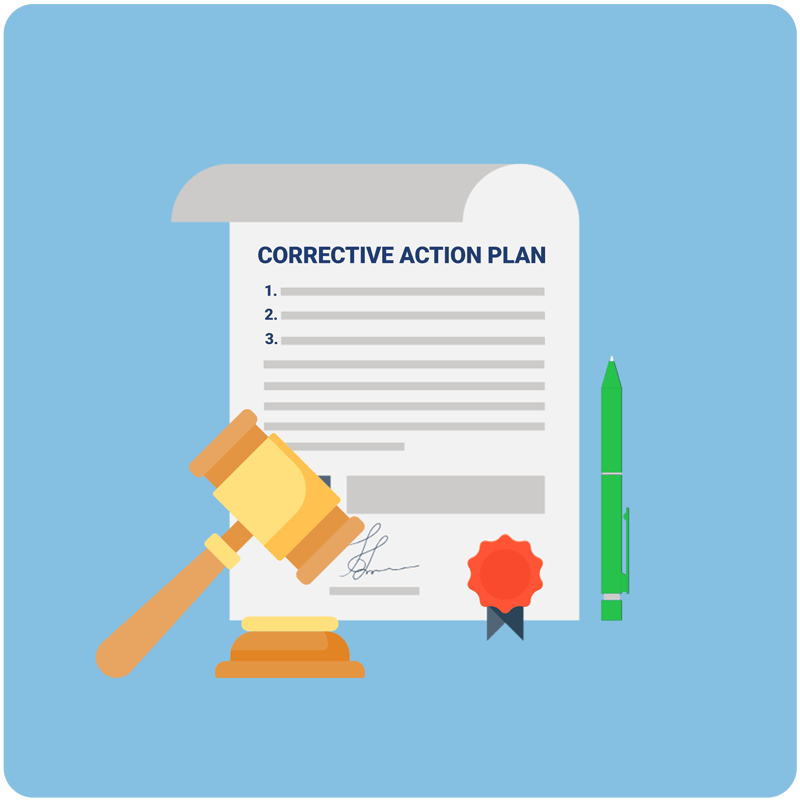
March 3, 2025   Welcome to the fourth and final installment of Abyde’s HIPAA Investigation Survival Series. We’ve already reviewed the initial breach, the letter you received, organizing documentation in response to the letter and data request from the OCR, and now the possible outcomes of a HIPAA investigation.  There are a few possible outcomes for a HIPAA investigation. As discussed at the end of the previous blog post, the ultimate judgment from the OCR could be levied months or even years after the investigation started.  What are the possible outcomes of a HIPAA Investigation? The most favorable outcome of an investigation is when the OCR closes your investigation. Your OCR investigator will inform you through writing, either through an official email or letter, that your documentation was sufficient, showcasing that your practice is implementing the right safeguards to secure Protected Health Information (PHI). Once an investigation is closed, you’ve officially passed the investigation.  However, the OCR can and will levy monetary fines if your documentation is insufficient. Monetary fines range from $141 to over $2 million per violation. Fines are tiered, starting with tier 1, which is the least serious based on a sincere lack of knowledge of a violation, to tier 4, or willful neglect of a situation if not corrected within 30 days. These fines are also adjusted yearly based on inflation.  HIPAA fines are categorized into two types: Civil Monetary Penalties and Settlements. Civil Monetary Penalties are imposed when a practice is found guilty of violating HIPAA regulations. The practice and the OCR negotiate settlements, and the practice does not admit to any HIPAA violations once paying the fine.  Both forms of penalties are highlighted on the OCR’s website as press releases and written about by numerous healthcare compliance news professionals, meaning this fine will live on the internet forever.  Lastly, the OCR can levy a Corrective Action Plan (CAP) in addition to a monetary penalty. A CAP requires a fined practice to be monitored by the OCR for several years, as defined by the CAP. This leaves the practice subject to government scrutiny, another hurdle.    How Can I Avoid This? Proactive measures are key when it comes to avoiding a HIPAA investigation. By implementing the appropriate safeguards before a situation occurs and properly training all staff, your practice can avoid common mistakes leading to breaches.  Utilizing a software solution is imperative when handling HIPAA compliance. Outsourcing compliance streamlines compliance for your practice, freeing your time and providing an easily accessible hub for all documentation.  To learn more about simplifying HIPAA compliance for your practice, schedule a consultation with one of our experts today.  To visit our first installment of this series about the breach that likely causes an investigation, please visit here, learn more about the audit letter, visit here, and learn more about organizing documentation for an investigation here.   
Corrective Action Plan Fine
Fines, HIPAA

Fool me once, shame on you… Fool me twice, here’s a Corrective Action Plan

December 16, 2022 Gaurav Modi Comments Off on Fool me once, shame on you… Fool me twice, here’s a Corrective Action Plan

December 16, 2022 On Wednesday, the HHS Office for Civil Rights announced a settlement with a California dental practice over impermissible disclosure of patient-protected health information (PHI). The practice faces potential violations of the HIPAA Privacy Rule by inappropriate use of social media to respond to patient reviews and disclosing protected health information.  OCR Director, Melanie Fontes Rainer, stated, “This latest enforcement action demonstrates the importance of following the law even when you are using social media. Providers cannot disclose protected health information of their patients when responding to negative online reviews.”  The practice faces a lofty fine of $23,000 and a Corrective Action Plan that will be monitored by the OCR for the next two years. Within the CAP, the practice is responsible for updating and maintaining all policies and procedures to comply with the Federal standards that govern the privacy and security of individually identifiable health information. Additionally, all members of the staff must receive training within 30 days of the updated policies and procedures to comply with the Privacy Rule within 30 calendar days of the implementation of the policies and procedures.  This is the second offense for the same office in the last 5 years. In November 2017, the OCR received a complaint regarding impermissibly disclosed PHI in online review responses. The protected health information included patient names, treatment, and insurance information. Through the investigation, the OCR found other violations including failure to provide an adequate Notice of Privacy Practices and implement Privacy policies and procedures.  As a word of advice from your HIPAA and compliance experts, review all PHI and Privacy Rule policies and procedures with any members of your staff that handle online reviews and social media responses. And while you’re at it, for those of you who may use a third party to handle reputation management, check those Business Associate Agreements, and remind them of our best practices.

What is a HIPAA Corrective Action Plan?
Audits, Fines, HIPAA

What is a ‘Corrective Action Plan’?

September 9, 2020 Gaurav Modi Comments Off on What is a ‘Corrective Action Plan’?

September 9, 2020 HIPAA Settlements are more than just $$$ If you’re like most practices, you might just see $$$ when a HIPAA fine makes the news. And yeah – million dollar fines are no joke. But a HIPAA violation settlement is more than just a dollar sign, and often includes something called a ‘corrective action plan’.  This corrective action plan, or CAP, is basically equivalent to ‘you messed up, here’s two years of administrative paperwork to fix your issues and think about what you’ve done.’ Yeah, you read that right – two years. If you thought paying a fine and putting it behind you was the extent of the bad news, we’re here to tell you why a CAP is just as important if slapped with a HIPAA violation. ALL the Paperwork The goal of a CAP is to correct the issues that caused the HIPAA violation in the first place. However, CAP requirements aren’t just a simple ‘do this next time’ and involve quite a bit of paperwork. Over the course of the designated time frame, one to typically two years, practices are required to: Lets face it, no one likes paperwork (even hearing that word makes us cringe). Having to complete what’s required in a CAP is often far more paperwork than maintaining a regular HIPAA compliance program would be – another reason to be compliant before an incident occurs. Even More Consequences Failing to complete a corrective action plan within the designated time frame can void the initial settlement and can leave a practice open to additional fines and penalties – yikes. It may just be paperwork, but the OCR takes it seriously, and leaves practice’s having to juggle a CAP on top of their already full plate of patient care, regular operations, and reputation management after landing in the news for a HIPAA violation.  So, who doesn’t want to be stuck with a mound of paperwork and the OCR breathing down your neck? (We’re raising our hand – both hands actually.) Getting ahead of violations by completing the SRA and HIPAA program requirements before a breach, complaint or audit will save your practice the pain of a CAP and help avoid a violation in the first place. After all, if you have all the right policies, SRA, and risk management plan in place before a breach you’ve already got OCR requirements down – but with less time spent, on your own schedule, and without the OCR looking over your shoulder.

Recent Posts

  • What OSF Healthcare’s Ransomware Fine Teaches Every Practice About SRAs
  • Spencer Gifts HIPAA Settlement: Ransomware, Risk Analysis, and What Comes Next
  • OCR Ransomware Settlements: 4 Massive HIPAA Fines from April 2026 & How to Avoid Them
  • 2026 OSHA HazCom Deadlines: How the GHS Update Impacts Your Practice
  • 15 Million Reasons to Review Your Business Associates: Lessons from the MMG Fusion Settlement

Recent Comments

No comments to show.

Archives

  • August 2026
  • June 2026
  • May 2026
  • March 2026
  • February 2026
  • January 2026
  • December 2025
  • November 2025
  • October 2025
  • September 2025
  • August 2025
  • July 2025
  • June 2025
  • May 2025
  • April 2025
  • March 2025
  • February 2025
  • January 2025
  • December 2024
  • November 2024
  • October 2024
  • September 2024
  • August 2024
  • July 2024
  • June 2024
  • May 2024
  • April 2024
  • March 2024
  • February 2024
  • January 2024
  • December 2023
  • November 2023
  • October 2023
  • September 2023
  • August 2023
  • July 2023
  • June 2023
  • May 2023
  • April 2023
  • March 2023
  • February 2023
  • January 2023
  • December 2022
  • November 2022
  • October 2022
  • September 2022
  • August 2022
  • July 2022
  • June 2022
  • May 2022
  • March 2022
  • February 2022
  • January 2022
  • December 2021
  • September 2021
  • August 2021
  • July 2021
  • June 2021
  • May 2021
  • April 2021
  • March 2021
  • February 2021
  • January 2021
  • December 2020
  • November 2020
  • October 2020
  • September 2020
  • August 2020
  • July 2020
  • June 2020
  • May 2020
  • April 2020
  • March 2020
  • February 2020
  • September 2019
  • October 2018
  • July 2018
  • May 2018
  • November 2017
  • April 2017

Categories

  • Abyde News
  • Audits
  • Best Practices
  • Business Associates
  • Cybersecurity
  • Fines
  • HIPAA
  • Legislation
  • OSHA
  • Partner News
  • Facebook
  • Instagram
  • LinkedIn
  • YouTube
Abyde Logo

1.800.594.0883 | info@abyde.com

Automated HIPAA and OSHA Compliance

Our Reviews

From Our Blog
  • Don’t Get Caught Off Guard: HIPAA Audits are Back!
  • Don’t Be a Statistic: Why OSHA Compliance Matters in Healthcare
  • What Money Doesn’t Cover: The True Price of HIPAA Non-Compliance
  • HIPAA: It’s Not Just a Training – Your Guide to Continuous Compliance
Solutions
  • HIPAA for Covered Entities
  • OSHA for Healthcare
  • HIPAA for Business Associates
  • SRA for Covered Entities
  • Abyde Incident Response Program
  • Abyde Reseller Program
Resources
  • News
  • Events
  • Partners
  • HIPAA Badges
  • OSHA Badges
  • Learning Center
  • Compliance FAQs
Company
  • About Us
  • Who We Serve
  • Pricing
  • Contact Us
  • Newsletter
  • Jobs
  • COPYRIGHT © 2026 ABYDE
  • |

  • TERMS & CONDITIONS
  • |

  • PRIVACY POLICY
  • |

  • SECURITY MEASURES
  • |

  • E-SIGNATURE TERMS